How to Grow Basil from Seed Indoors
If you live in a colder climate like I do in Wisconsin (Zone 5), you can’t plant basil outside in early spring and expect it to survive. Basil loves warmth. Our springs are unpredictable.
So every year, I start my basil indoors. It’s simple, inexpensive, and gives me strong plants ready to move outside once the weather finally cooperates.
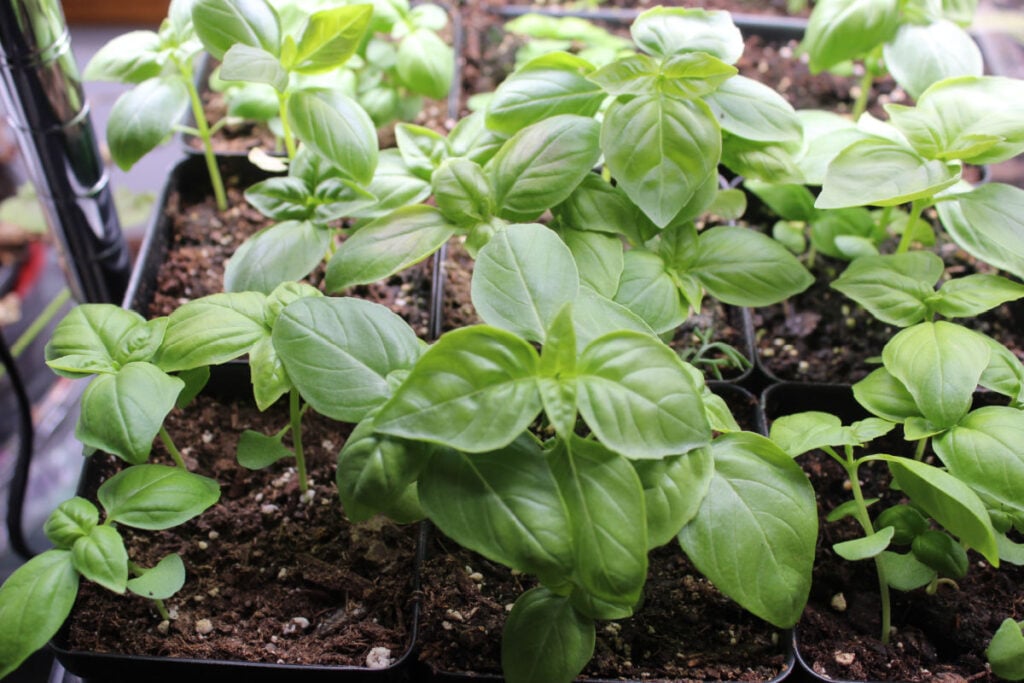
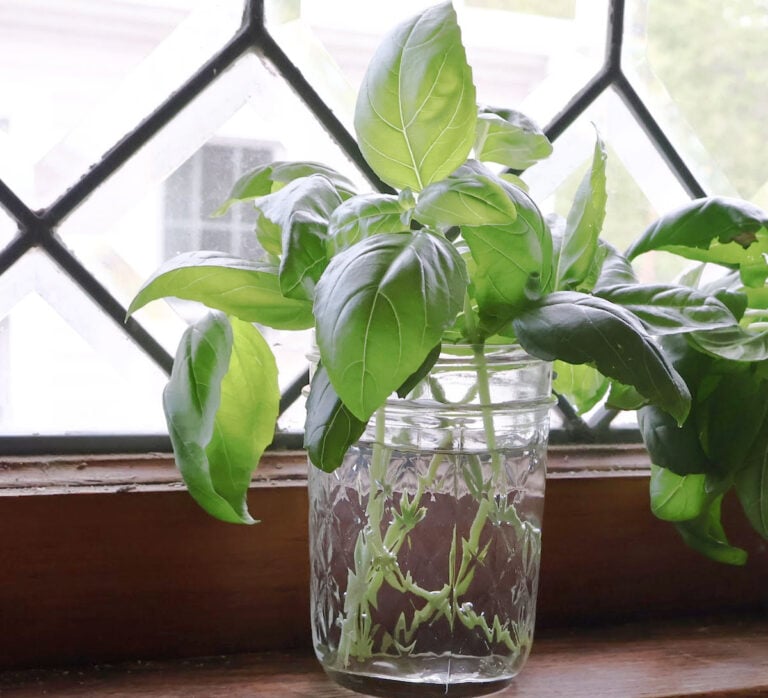
If you’ve never started seeds before, basil is one of the easiest plants to begin with. If you have larger basil plants already, you can also grow basil from cuttings!
When to Start Basil Seeds Indoors
In Zone 5, our last frost is usually around mid-May. If you don’t know when to plant your basil seeds, look at the back of the seed package. It will tell you when you can start.
Start basil seeds indoors about 4 to 6 weeks before your last frost date. For me, that means late March to early April.
If you live in a warmer climate, you may be able to plant directly outdoors once soil temperatures are consistently warm. Basil does not tolerate cold soil.
What You Need to Start Basil Seeds
You can keep this very simple or upgrade your setup depending on how many plants you want to grow.
Simple Budget Setup
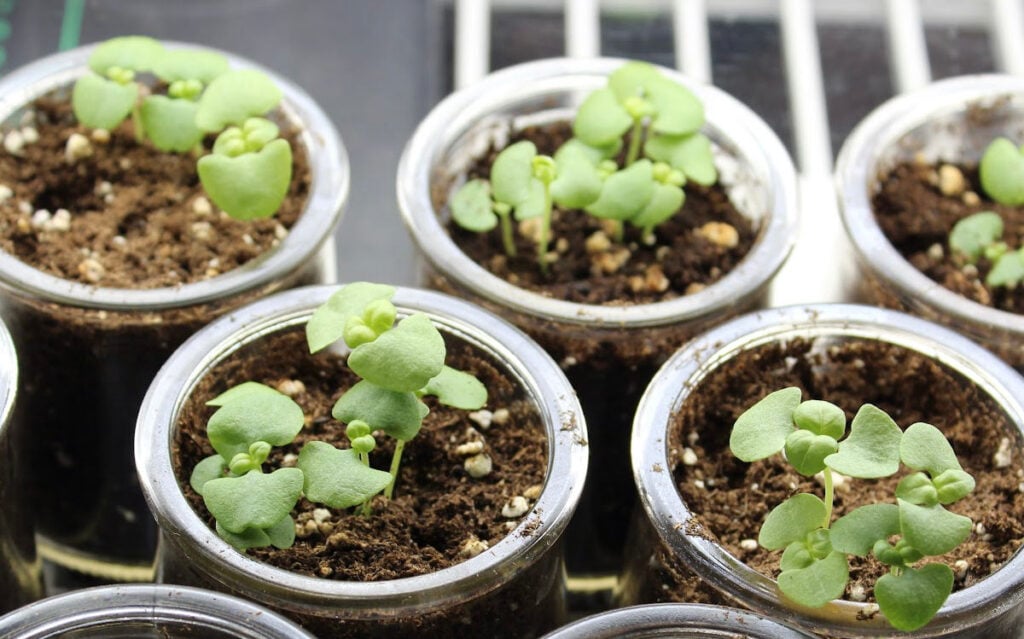
- Small plastic cups or yogurt containers
- Scissors or a nail to poke drainage holes
- Seed starting mix
- Basil seeds
- A bright, sunny window
If you only want a few basil plants, this works perfectly.
Upgraded Setup (More Reliable)
- Seed starting tray with drainage holes
- Clear humidity dome
- Heat mat
- Grow light
This setup helps seeds sprout faster and produces stronger seedlings, especially in early spring when natural light is limited.
Seed Starting Mix vs Potting Soil – Why It Matters
This is one of the biggest success factors when starting seeds.
Seed starting mix is lighter and finer than regular potting soil. It holds moisture evenly and allows tiny roots to grow easily. Potting soil is heavier and designed for established plants. It often contains larger pieces of bark that can overwhelm small seedlings.
Basil seeds are small. They need light, airy soil to germinate well. If you use heavy garden soil, seeds may rot before they ever sprout.
Step 1 – Prepare Your Containers
Make sure whatever container you use has drainage holes.
Moisten your seed starting mix before filling containers. It should feel like a wrung-out sponge – damp but not dripping. Fill containers and gently press the soil down. Do not pack it tightly.
Step 2 – Plant the Basil Seeds
Place 2 to 3 seeds in each container or cell.
Cover lightly with about 1/4 inch of soil.
Water gently so the seeds don’t wash away. Basil seeds do not need to be planted deep.
Step 3 – Keep the Soil Warm
Basil germinates best when soil temperatures are around 70 to 75 degrees. In Wisconsin homes in early spring, soil can be cooler than you think.
A heat mat placed under your trays keeps soil consistently warm and helps seeds sprout faster. If you don’t have a heat mat, place containers in the warmest part of your house.
Germination usually takes 5 to 10 days.
Step 4 – Cover to Maintain Moisture
Seeds need steady moisture to sprout. You can cover containers with:
- A humidity dome
- Plastic wrap
- A clear plastic lid
This traps moisture and reduces how often you need to water. As soon as you see green sprouts, remove the cover.
Leaving it on too long can cause mold or weak seedlings.
Step 5 – Give Seedlings Strong Light
Once basil sprouts, light becomes very important. If seedlings stretch tall and thin, they are not getting enough light.
You can use:
- A bright south-facing window
- A simple grow light positioned 2 to 3 inches above the plants
In early spring in Zone 5, a grow light usually produces stronger plants.
Step 6 – Thin the Seedlings
When your basil has a few sets of true leaves, thin them. Use scissors to snip the weaker seedlings at soil level. Do not pull seedlings out – that can disturb the roots of the one you want to keep.
Leave one strong plant per container. I always feel bad doing that but it helps the plant grow strong.
How Long Does Basil Take to Grow from Seed?
Here’s what to expect:
- Germination: 5 to 10 days
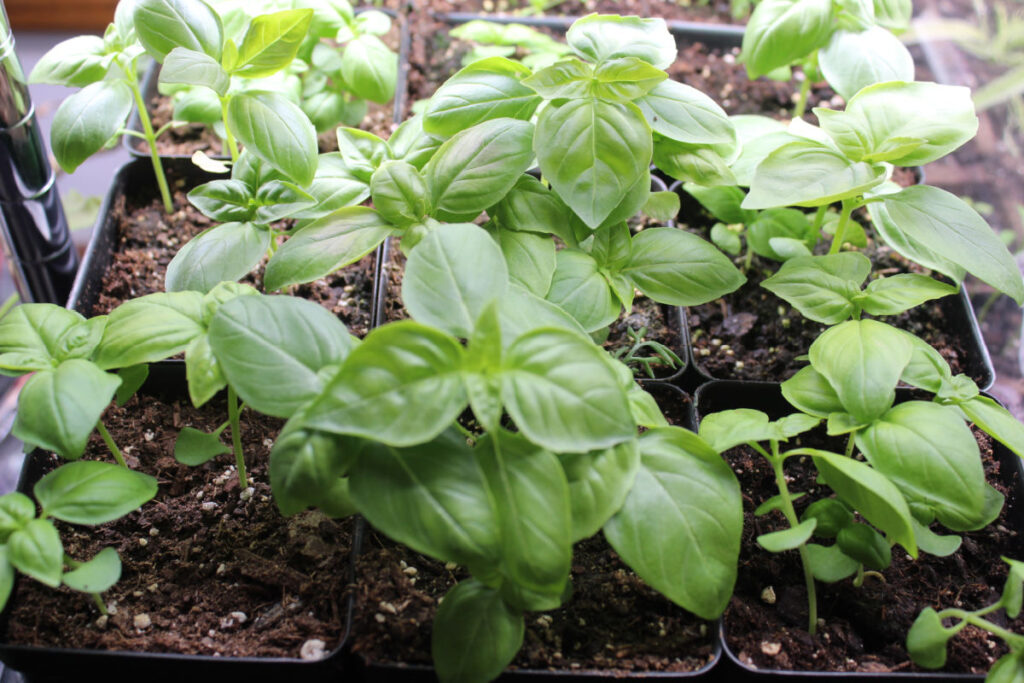
- Seedling growth: 2 to 3 weeks
- Ready to transplant: 4 to 6 weeks
- Ready to harvest: about 6 to 8 weeks from planting
Basil grows quickly once it gets warm and established.
When to Move Basil Outdoors
Wait until:
- All danger of frost has passed
- Night temperatures stay above 50 degrees
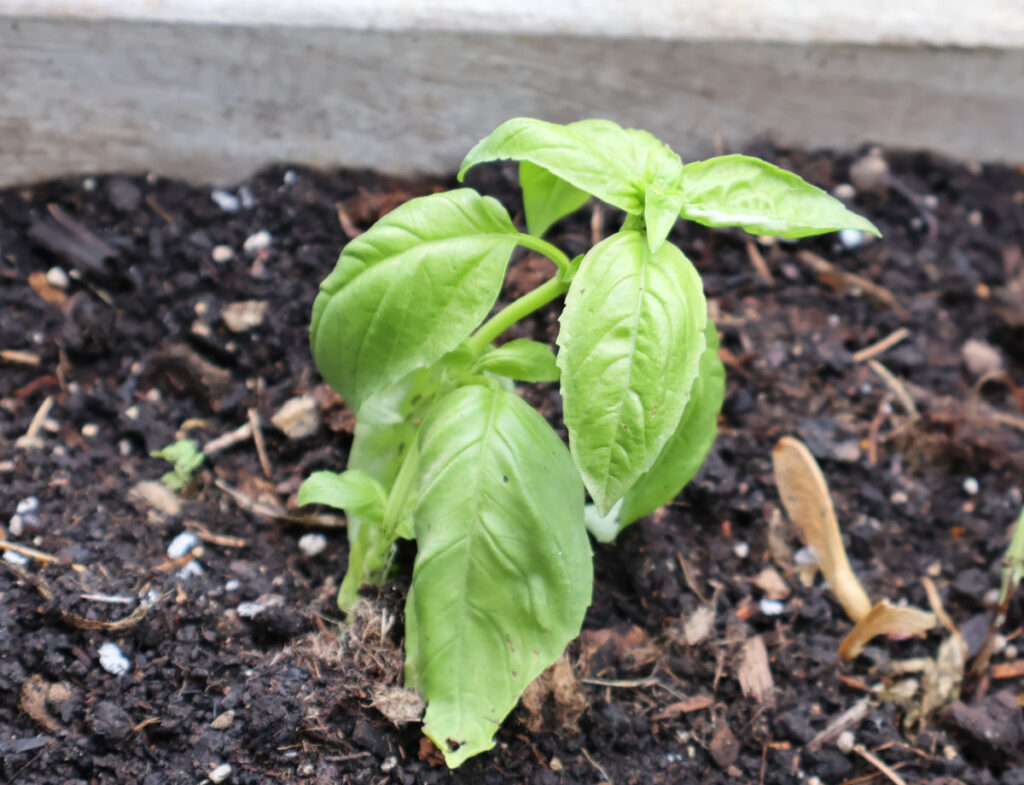
Before planting outside, harden off your basil by gradually exposing it to outdoor conditions over 5 to 7 days. Put it in the sun for 1/2 hour the first day, and extend the time every day until after a week, the plants are used to the sun.
This prevents shock. And when your basil grows, you know it’s happy!
What to Do With Fresh Basil
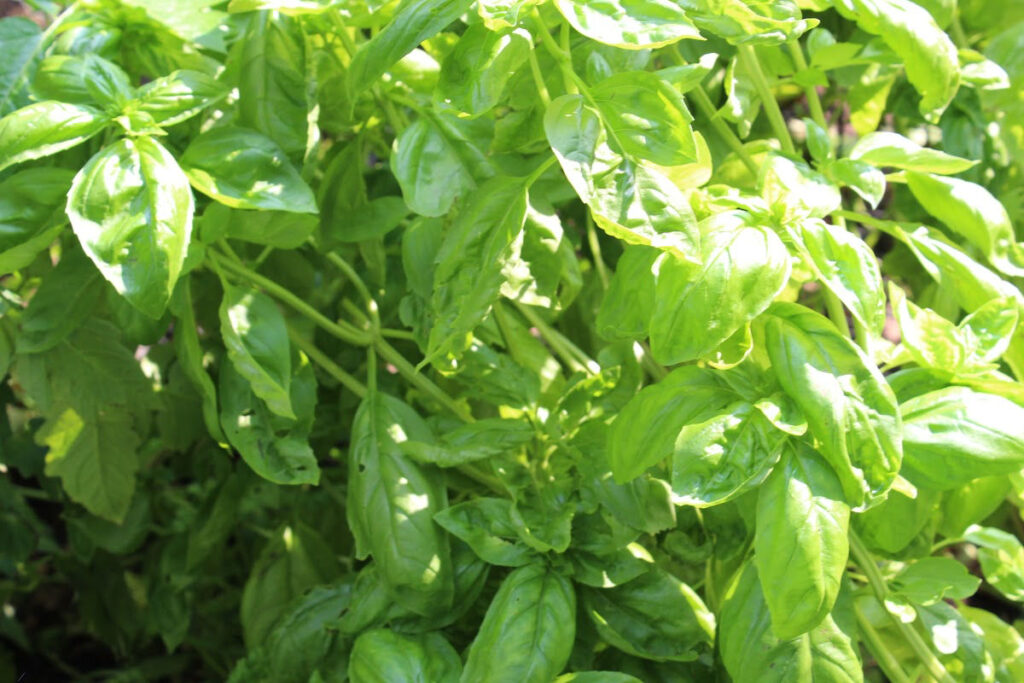
Once your basil starts producing leaves, you’ll be surprised how quickly it grows.
Fresh basil is easy to use in everyday meals. Add chopped leaves to bruschetta, layer it into caprese salad, stir it into pasta, or sprinkle it over eggs and sandwiches.
You don’t need fancy recipes. A few fresh leaves can completely change the flavor of a simple dish.
If you find yourself harvesting more basil than you can use, you can preserve it by drying or air drying it – which I’ll cover in a separate guide.
FAQs
Not enough light. Move them closer to a grow light or brighter window.
Soil may be too cold. Use a heat mat or move to a warmer location.
Too much moisture and poor airflow. Remove covers once seedlings appear.
Usually overwatering. Let the top of the soil dry slightly before watering again.
Warmth, light, and the right soil make all the difference.
Once you’ve done it once, you’ll likely do it every spring.