How to Grow Radishes – Easy Beginner Guide
If you’ve never grown vegetables before, start with radishes.
They sprout quickly, tolerate cool weather, and are ready to harvest in about a month. In Zone 5, radishes are often the very first thing I plant in my raised beds because they actually prefer cooler soil.
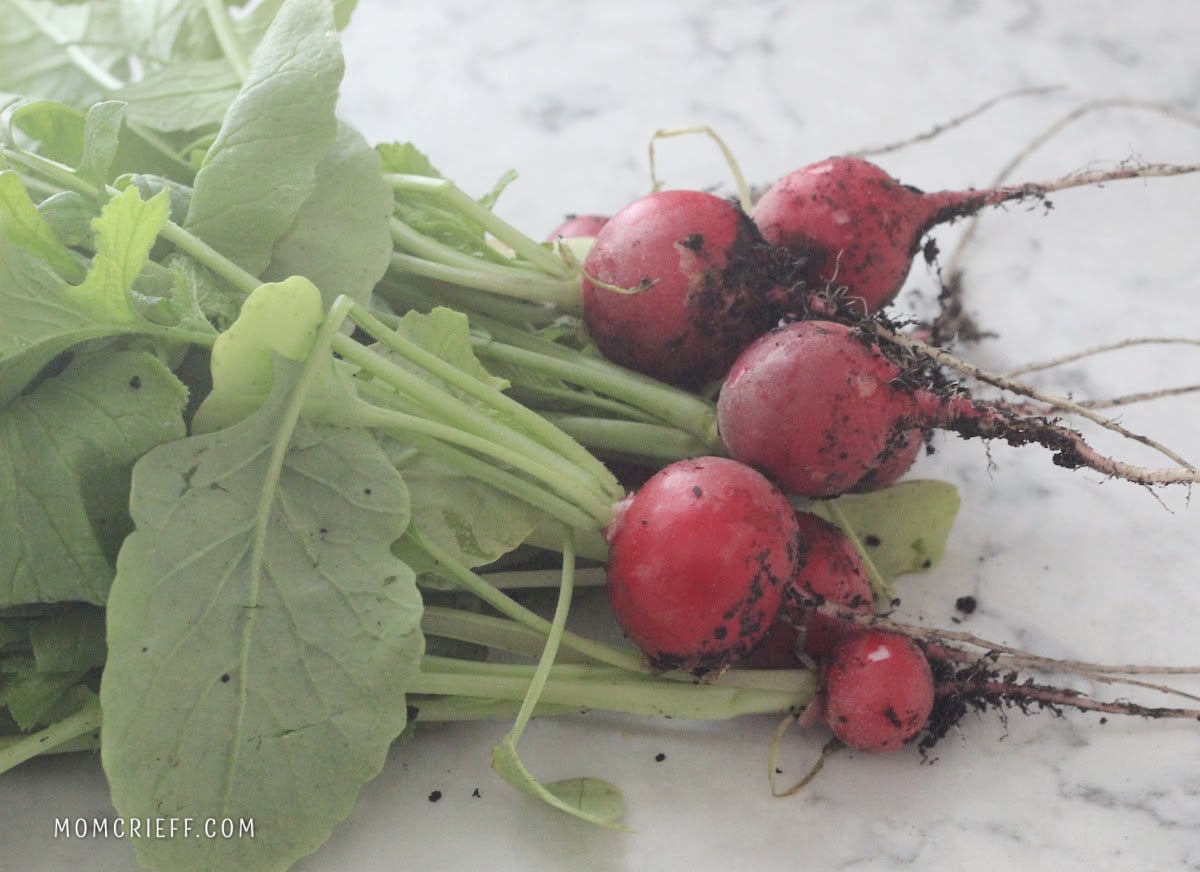
They’re simple. They’re fast. And they build confidence.
Whether you garden in raised beds, plant directly in the ground, or grow in containers on a patio or balcony, radishes are one of the easiest vegetables to succeed with. I also love growing basil from seed because it’s another easy one!
Why Radishes Are Perfect for Beginners
Radishes are ideal if you want quick results without complicated care.
- They germinate in just a few days
- They tolerate chilly spring temperatures
- They grow in small spaces
- They don’t require perfect soil
- You can plant multiple rounds in one season
Even experienced gardeners still plant radishes every spring because they’re reliable and low effort.
Best Radish Varieties for Beginners
Classic red round radishes are the easiest place to start.
They grow quickly and perform well in cool Zone 5 spring weather.
French breakfast varieties are another good option and tend to be slightly milder.
When to Plant in Zone 5
Radishes are a cool-season vegetable.
In Zone 5, plant them:
- 4 to 6 weeks before your last frost
- As soon as the soil can be worked
- When soil temperatures are at least 40°F
For many Zone 5 gardeners, that means April.
Radishes do not love heat. Once temperatures consistently climb into the mid-70s and higher, they can become woody or overly spicy. Early spring is their sweet spot.
You can also plant a fall crop in late summer once temperatures begin cooling again.
Where to Grow
Radishes are flexible and grow well in:
- Raised garden beds
- In-ground vegetable gardens
- Containers at least 6 inches deep
If you garden on a balcony or patio, radishes are a great option. A wide container with loose soil works beautifully.
They prefer:
- Full sun (6+ hours daily)
- Loose, well-draining soil
- Soil free of large rocks
In raised beds, they’re especially easy because the soil is already loose and workable.
How to Plant Radish Seeds
Radishes should always be direct sown. They do not transplant well.
Step 1 – Prepare the soil
Loosen the top few inches of soil. Remove rocks and break up large clumps.
Step 2 – Sow the seeds
Plant seeds about 1/2 inch deep and 1 inch apart.
If planting in rows, space rows 6 to 8 inches apart.
In containers, scatter seeds evenly and lightly cover.
Step 3 – Cover and water
Gently cover with soil and water carefully. Keep soil evenly moist until seedlings emerge.
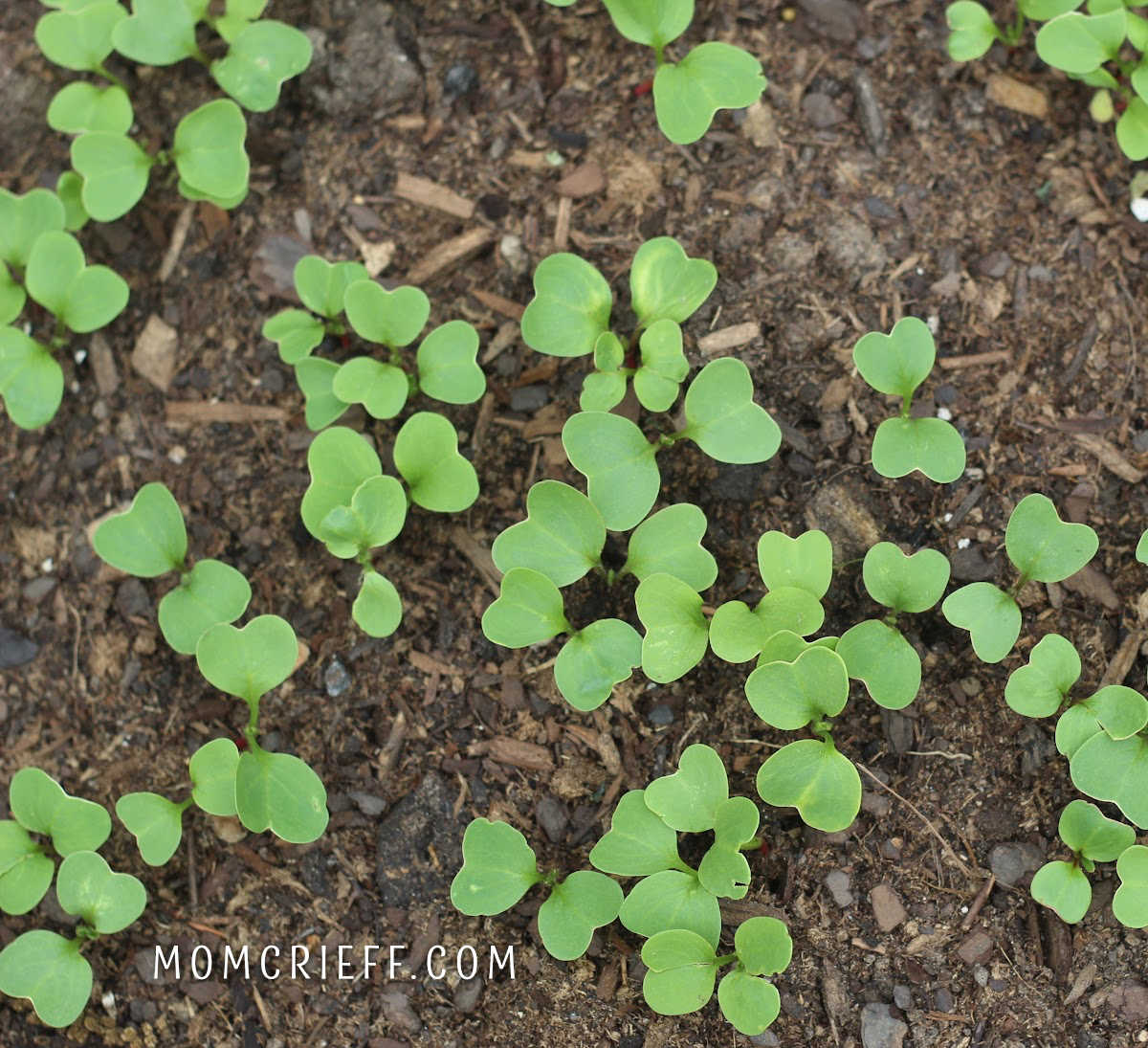
Radish seeds usually sprout within 3 to 7 days.
Do You Need to Thin Radishes?
Yes.
Once seedlings have a few true leaves, thin them so they are about 2 inches apart.
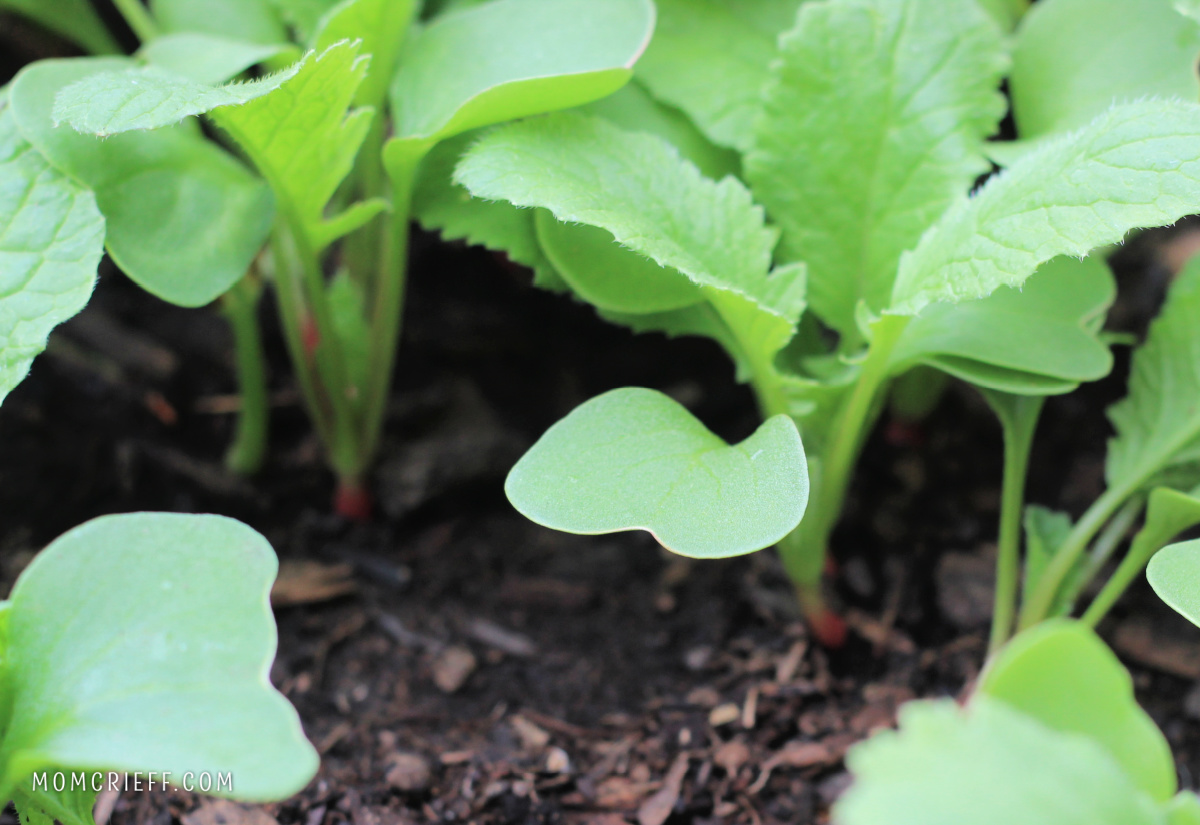
Crowded radishes won’t develop proper roots. It feels wasteful to pull tiny seedlings, but thinning is what gives you full-sized radishes.
Thinning Hint: So you don’t disturb all the roots, cut off the leaves of the extra plants right at soil level.
How Often to Water
Radishes need consistent moisture to develop properly.
- Water when the top inch of soil feels dry
- Keep soil evenly moist but not soggy
- Avoid letting them dry out completely
Inconsistent watering can cause cracking or extra spicy roots.
Containers may need watering more frequently than raised beds, especially in warmer weather.
How Long Do They Take to Grow?
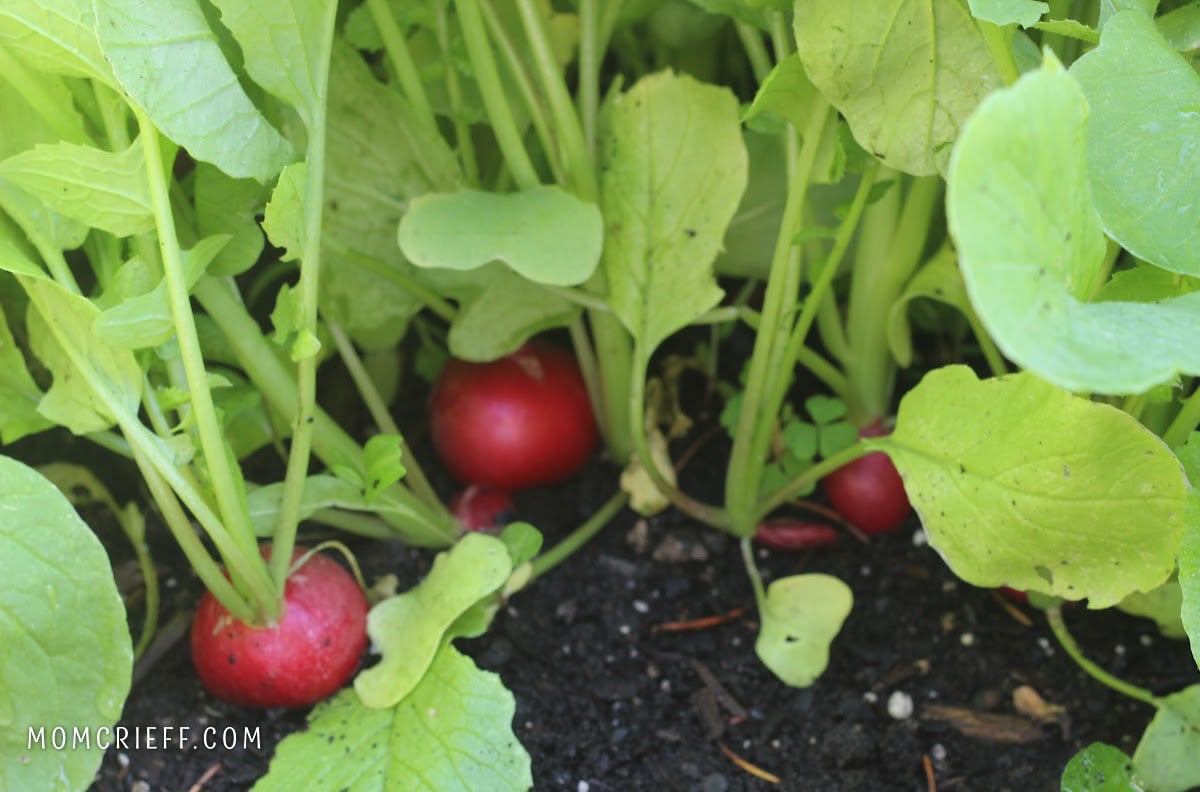
Most varieties are ready in:
25 to 30 days.
That quick turnaround is one reason radishes are so satisfying for beginners.
Check your seed packet and harvest promptly once they reach mature size. Leaving them in the ground too long can lead to woody texture.
Succession Planting
Because radishes grow quickly, you can plant several rounds in one season.
Instead of planting everything at once, try:
- One batch early spring
- A second batch about 10 days later
- A third if you want a longer harvest window
This prevents you from harvesting more radishes than you want all at once.
Common Radish Growing Mistakes
Planting too late in warm weather
Heat causes radishes to bolt and turn bitter.
Skipping thinning
Crowded plants produce small or misshapen roots.
Compacted soil
Roots need loose soil to develop properly.
Waiting too long to harvest
Overmature radishes become woody or hollow.
What to Plant After Radishes
Radishes mature quickly and free up space early in the season.
After harvesting, you can plant:
- Lettuce
- Spinach
- Bush beans
- Basil or other herbs
This makes them a smart early crop in raised bed planning.
Are Radishes Worth Growing?
Absolutely.
They’re fast, forgiving, and flexible. They grow in raised beds, in-ground gardens, and containers. They’re one of the simplest vegetables to grow in spring, and they help new gardeners feel successful quickly.
If you’re building a kitchen garden, radishes are an easy and practical first crop.
never grown anything from seed before, start here.
They germinate quickly, tolerate cool weather, and are ready to harvest in as little as 25–30 days. In Zone 5, radishes are often the first vegetable I plant in spring because they actually prefer cooler soil.
If you’re building a beginner-friendly kitchen garden, radishes belong at the top of the list.
They are a low-risk, high-reward crop. Even experienced gardeners still plant them every year because they’re reliable.
en garden. Even experienced gardeners plant them every spring because they’re dependable.
If you’re building confidence in growing your own food, radishes are a practical first step.