How to Turn a Bird Bath into a Succulent Planter
If you have an old bird bath that’s seen better days – or you’re just tired of constantly cleaning and refilling it – turning it into a succulent planter is a simple, practical way to give it new life. I’ve done this in my own garden, and it’s one of those projects that looks far more complicated than it actually is.
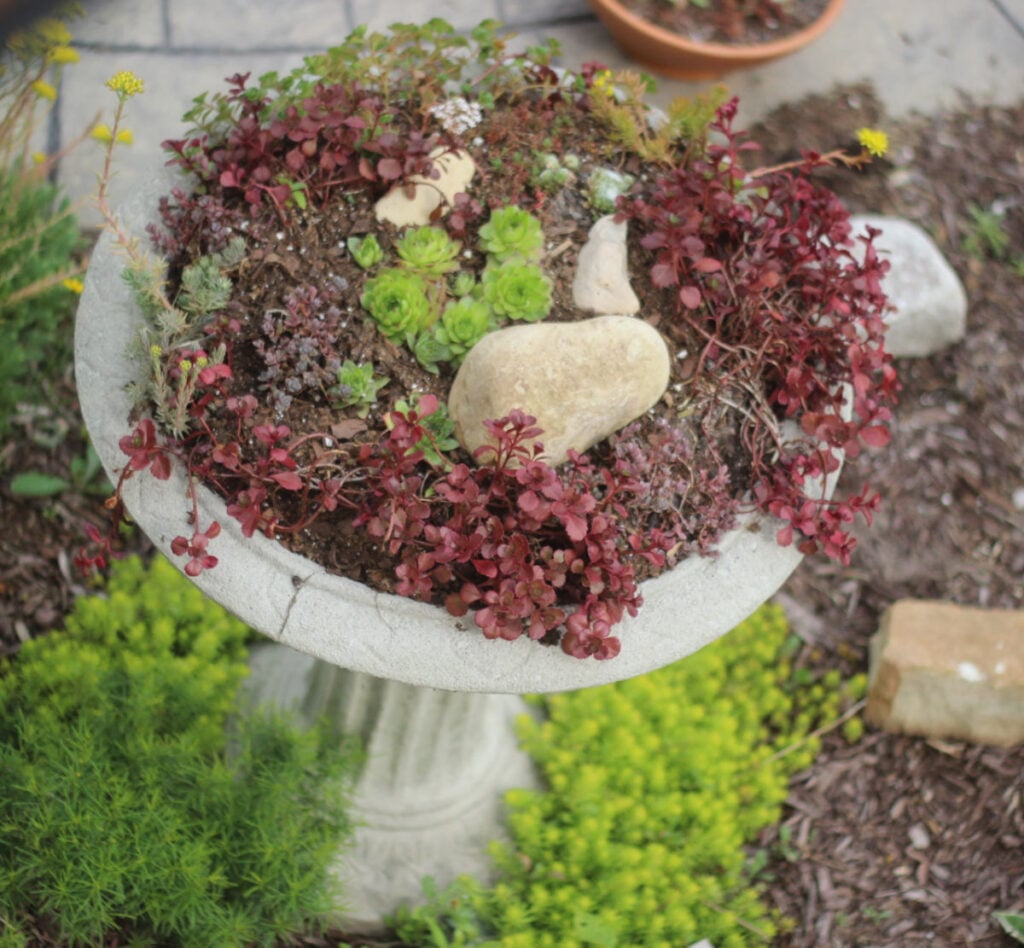
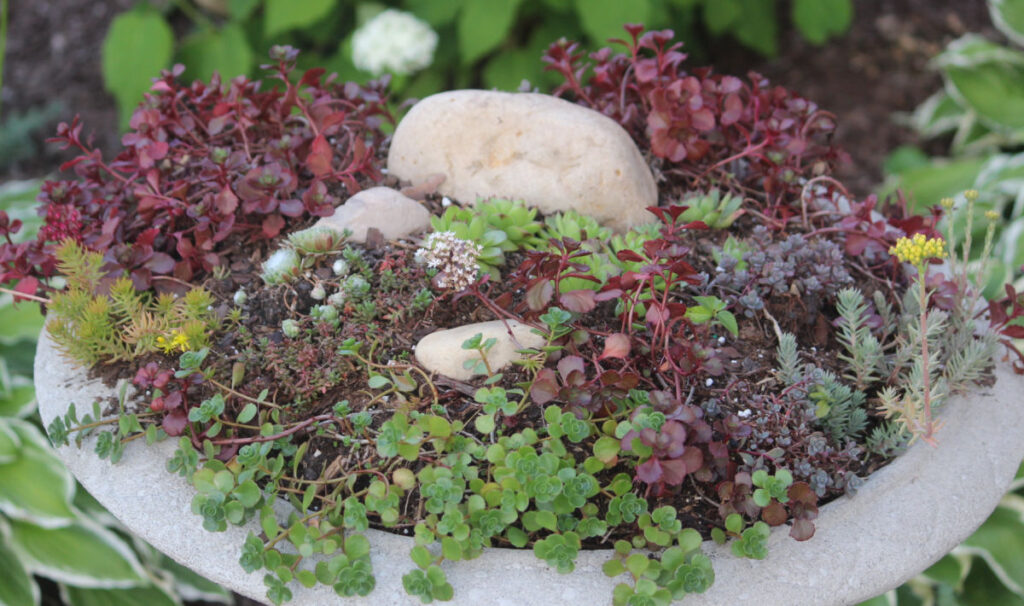
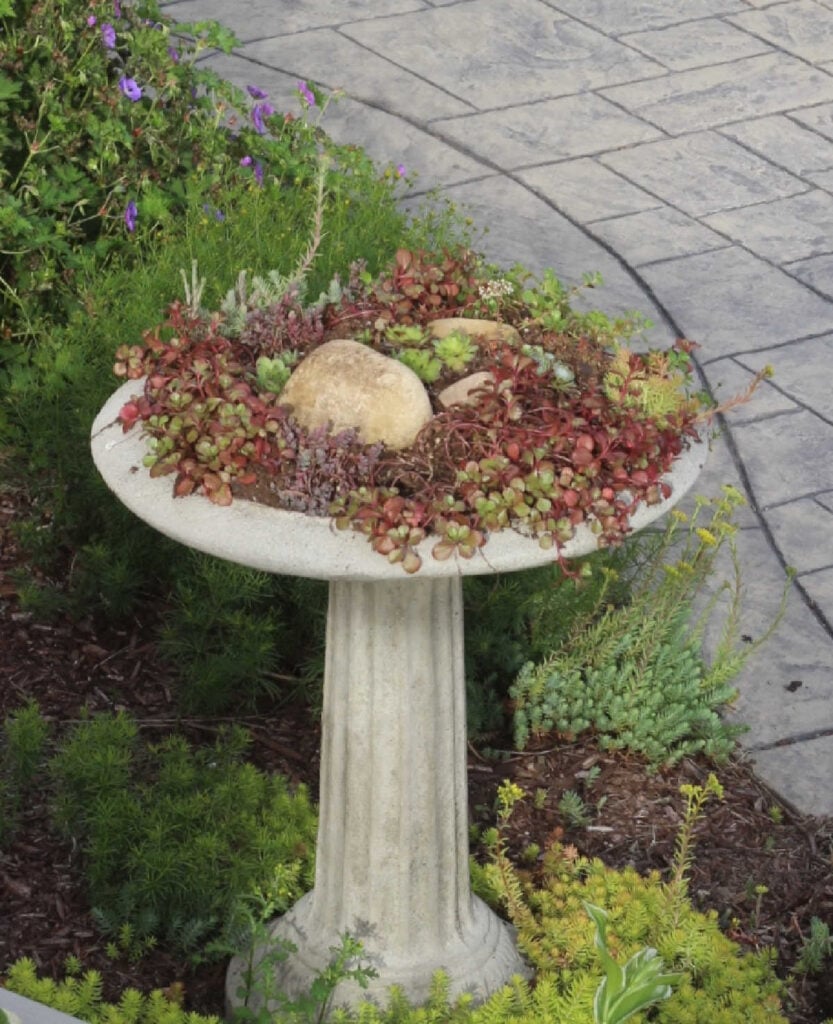
This bird bath planter has held up beautifully through an entire growing season and has become a real focal point in my garden. Best of all, it’s an easy container gardening project that doesn’t require deep planting knowledge or constant maintenance.
If you want to Bring Hens and Chicks Indoors, I wrote about some ideas and my experiences with them. If you are looking for a creative container idea, have a peek at this Spring Container Garden.
Why a Bird Bath Makes a Great Succulent Planter
Bird baths work surprisingly well as planters, especially for succulents, for a few key reasons.
First, the bowl is shallow. Most succulents don’t need deep soil, and too much depth can actually cause drainage problems. The wide surface area also gives you room to create a balanced arrangement instead of a single crowded plant.
Second, bird baths are elevated. That elevation improves air circulation, helps soil dry out faster after rain, and naturally discourages pests that often cause problems in ground-level containers.
Finally, repurposing an old bird bath is an easy way to add height and structure to a garden bed without buying a new planter. It feels intentional and decorative, not like a leftover container that got pressed into service.
A Quick Note About Drainage (This Matters!)
Most bird baths do not have drainage holes, and that’s the biggest concern people have with this project. That doesn’t mean you can’t use one – it just means you need to plan for it.
Here’s what has worked well for me:
- Start with a generous layer of gravel, small rocks, or broken pottery in the bottom of the bowl
- Use a gritty, fast-draining soil mix designed for succulents
- Choose plants that tolerate dry conditions and shallow roots
- Avoid overwatering – this is the most common mistake
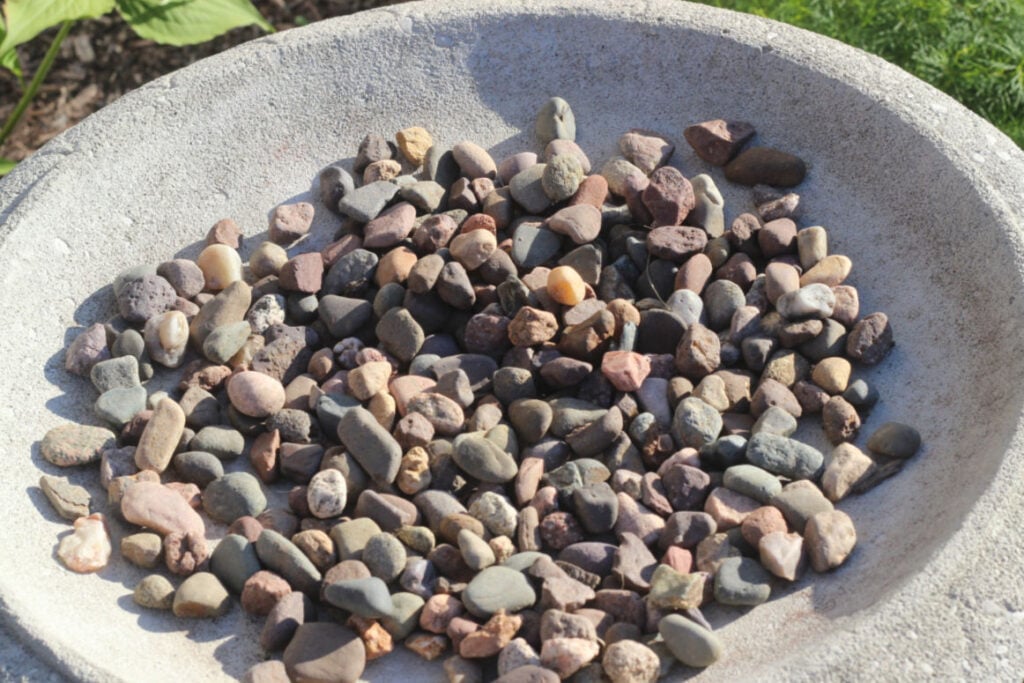
If your bird bath does have a drainage hole, even better. But if it doesn’t, the layered approach works as long as watering stays conservative. If it does rain and gets too much water, I gently tipped it a few times so the excess water poured out
Why I Love This Project
This is one of those garden projects that checks a lot of boxes for me.
- I reused a concrete bird bath I already owned instead of getting rid of it.
- Most of the plants came from my own yard or were divisions from existing succulents. That made this a very inexpensive but impressive project
- The elevated planter adds instant visual interest without taking up ground space.
- It gave new purpose to something that had stopped being functional. Everyone took a close look at it and had questions because it was a little different. I love the element of surprise in my garden.
- It looked good all summer with very little upkeep.
For casual gardeners, that combination is hard to beat.
Supplies You’ll Need
You don’t need much to put this together.
Old bird bath – concrete, cement, or ceramic all work
Succulent or cactus soil mix
Gravel, small rocks, or broken pottery for drainage
Succulent plants
Garden gloves and a small trowel
Optional: decorative larger stones or a few natural accents for finishing the surface
Step-by-Step: How to Plant a Bird Bath with Succulents
Step 1: Create a Drainage Layer
Add a thick layer of gravel or broken pottery to the bottom of the bird bath. This helps excess water move away from plant roots.
Step 2: Add Succulent Soil
Use a well-draining soil mix made specifically for succulents and cacti. Regular potting soil tends to hold too much moisture for this type of container.
Step 3: Arrange and Plant
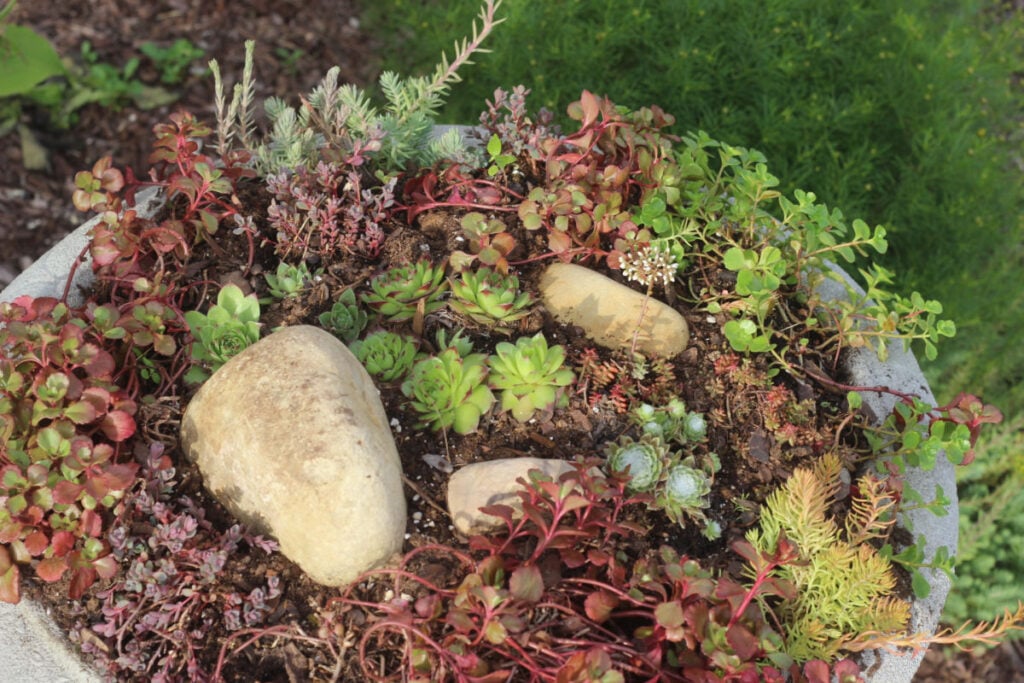
Set your plants in place before planting to get a feel for spacing. Nestle each plant into the soil, keeping the crown above the surface.
Step 4: Finish the Surface
Top with decorative pebbles or small stones if you like. This helps reduce soil splash and gives the planter a finished look.
Step 5: Water Lightly
Give the planter a light watering to settle the soil. After that, let it dry out completely between waterings.
Best Succulents for this Planter
Because the container is shallow, plant choice matters. These have worked well for me:
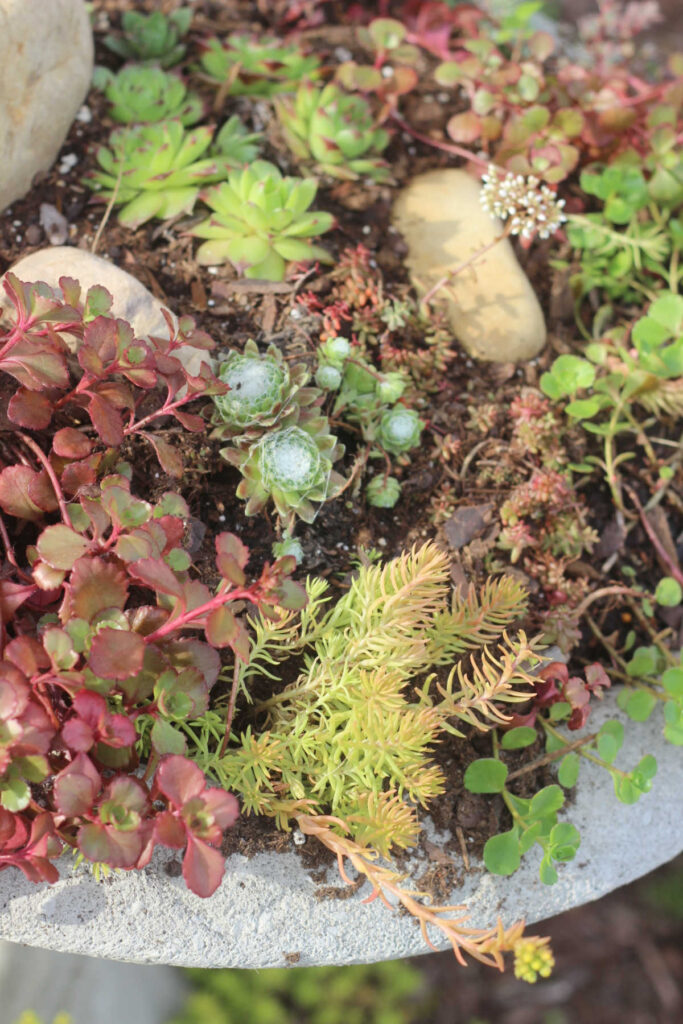
Hens and Chicks (Sempervivum) – Extremely hardy and spreads naturally
Sedum – Creeping varieties soften the edges nicely
Echeveria – Adds bold rosette shapes and color contrast
Haworthia or Aloe – Compact and architectural
Portulaca (Moss Rose) – A seasonal option if you want summer blooms. An inexpensive plant that I grow from seed every year. Eventually it decides to seed and grow itself : ).
Avoid plants that need frequent watering or deep root systems. This is a little garden that needs to stay dryer.
Zone-Specific Care (I Garden in Wisconsin, Zone 5)
I garden in Wisconsin, which puts me in Zone 5, and that absolutely affects how this planter is cared for.
If you live in a cold winter climate, here’s what you need to know:
- Concrete and ceramic bird baths can crack if water freezes inside them
- Most succulents will not survive winter outdoors in a container like this
- Hens and chicks can overwinter in Zone 5, but only when planted in the ground, not left in the bird bath
What I do instead:
- Move smaller bird bath planters into a bright indoor space for winter
- Or lift plants out in fall and plant them in the ground, giving them time to establish (a month or so). Not all will survive but those that do often start multiplying (yay, free plants!).
- Empty and protect the bird bath itself before freezing weather
If you garden in a warmer zone, your approach may be different – and that’s exactly why zone-specific advice matters.
Styling Tips for a Natural Look
You don’t need to overdo this planter.
A few larger stones, varied plant heights, and a balanced layout go a long way. I prefer keeping the look simple and letting the plants do the work rather than adding lots of decorative accents.